
Still Finding Perspective
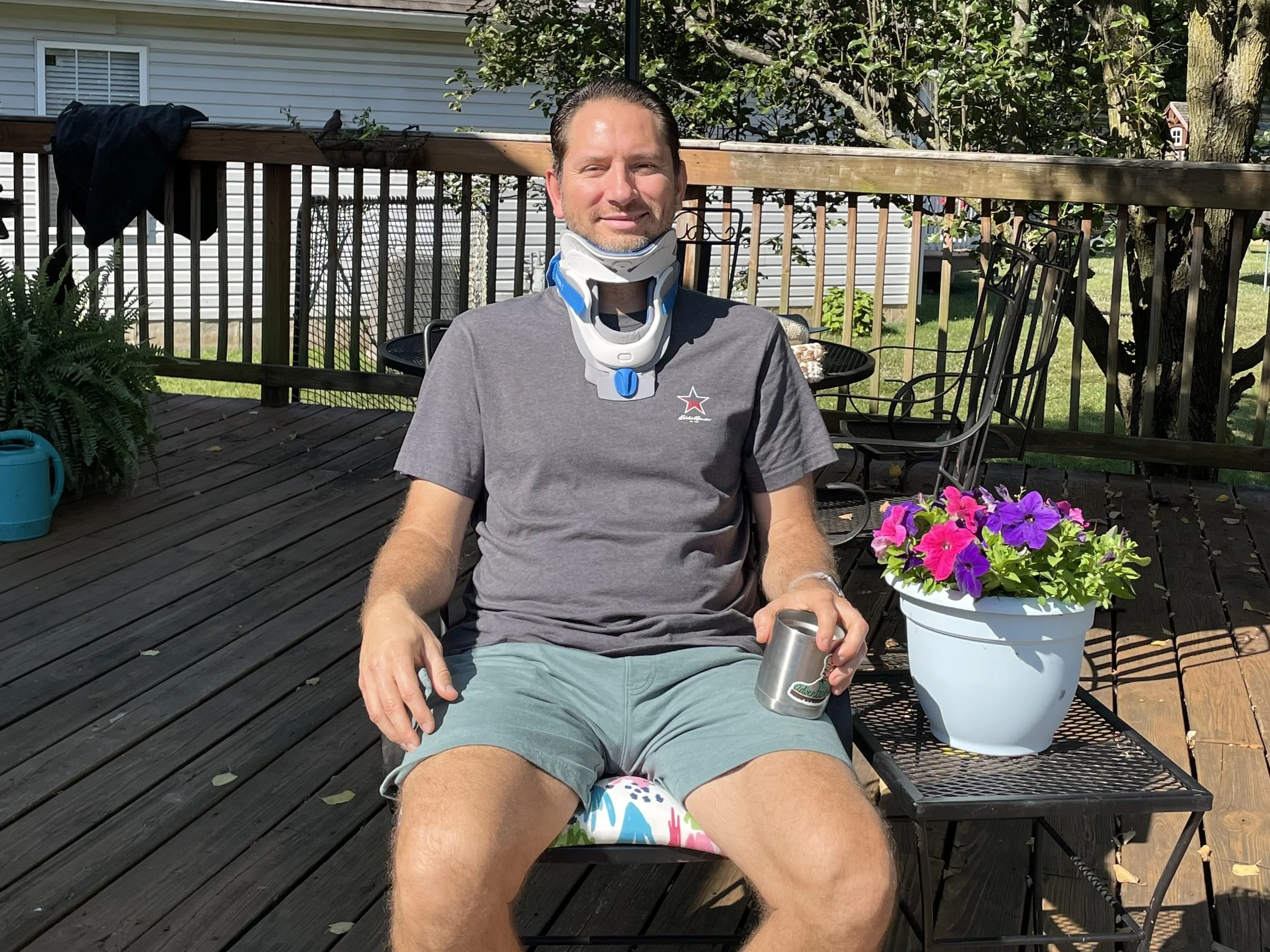
Almost five years ago, I lay beside my mountain bike in intense pain, wondering if I had just changed my life forever. I didn’t yet know I had broken multiple bones in my neck and back or that surgery and a long recovery lay ahead. As this anniversary approaches, I find myself returning to that moment and reflecting on everything that followed.
The accident left me with three broken vertebrae in my neck and six additional broken bones in my upper back. I spent more than 30 hours between two emergency rooms before undergoing spinal fusion surgery, followed by five nights in the hospital and months of recovery. The full weight of what had happened took time to sink in.
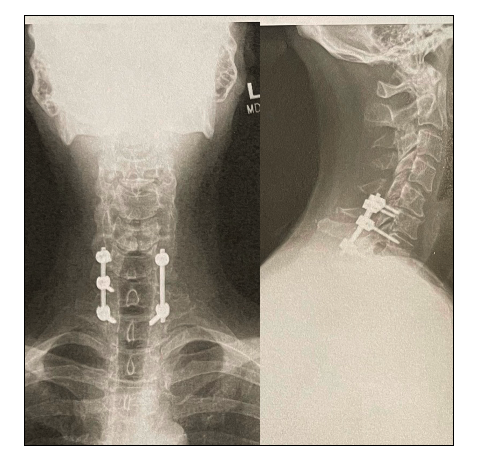
Images of spinal fusion post surgery
When the Reality Hit
I remember watching my physical therapist become emotional as she looked at my X-rays. Because I already knew and trusted her, her reaction carried even more weight. Until she said it out loud, I had not understood that the slightest difference in where one fracture occurred could have ended my life.
Her words landed with a force I hadn’t yet allowed myself to feel. Until then, I knew the accident was serious. In that moment, I understood just how narrowly I had escaped death.
When I finally came home, another realization settled in. I looked at my wife and began sobbing uncontrollably, apologizing for what I had done to her and our family. She tried to comfort me, reminding me that it was an accident and that we would be okay. But in that moment, I could not move past the guilt. It was a weight I can't recall ever carrying.
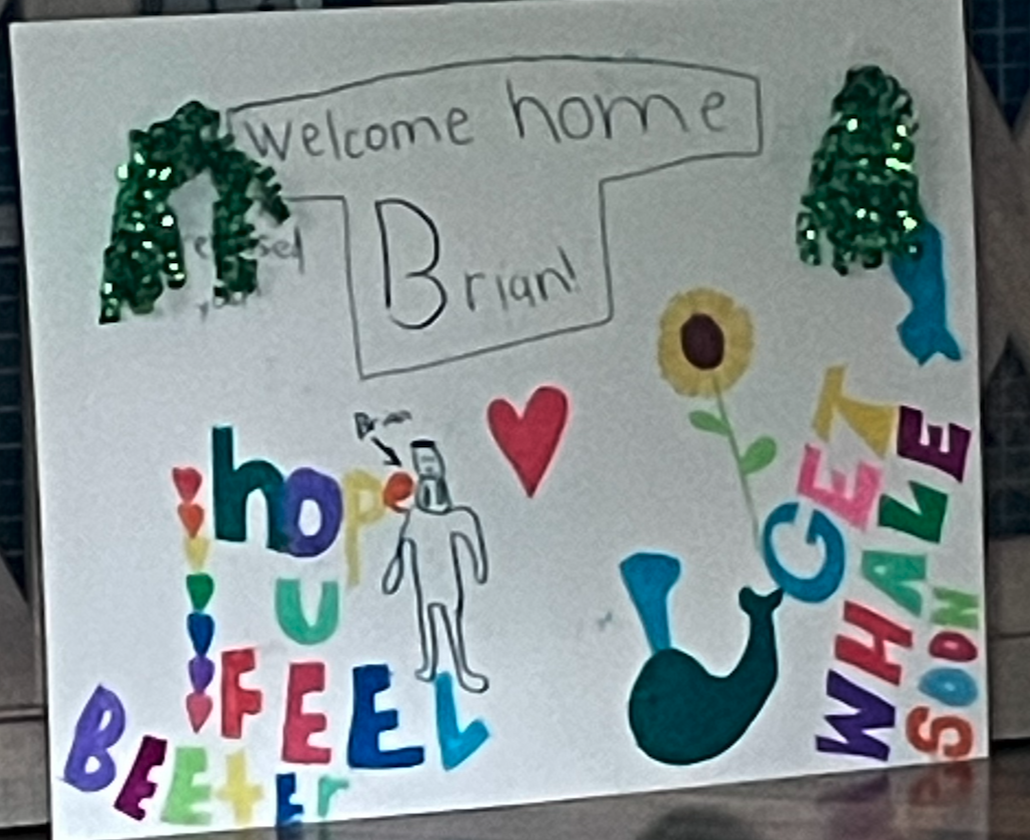
Waiting for me inside was this handmade sign. Two of my young neighbors had made it for me.
By choosing to put myself in that situation, I had put my health, my ability to work, and my role in providing for my family at risk. I had also placed an unexpected burden on the people I loved most, especially my wife, who was now helping me with every part of daily life. I was deeply grateful for her care, but overwhelmed by the fear that my accident had changed much more than my own life.
Gratitude I Had Never Experienced
As frightening and painful as those first weeks were, they were also filled with an intensity of gratitude like I’d never experienced before. Every time a doctor or nurse checked the feeling and movement in my arms and legs, I was reminded that I was not paralyzed. I could move. I could feel. I was alive. When compared with what could have happened, those simple realities filled me with real joy.
That gratitude was overwhelming in a way I had never experienced. Coming home after five nights in the hospital made ordinary food taste amazing. Sitting outside in the fresh air and sunshine felt like the best gift I’d ever received. I remember seeing my 18-month-old grandson become more comfortable around my neck brace, and it meant more than words can explain. The care people showed through their messages, prayers, visits, and offers to help was deeply moving. My world had suddenly become much smaller, but within that smaller world, I noticed and appreciated things I had completely overlooked before.
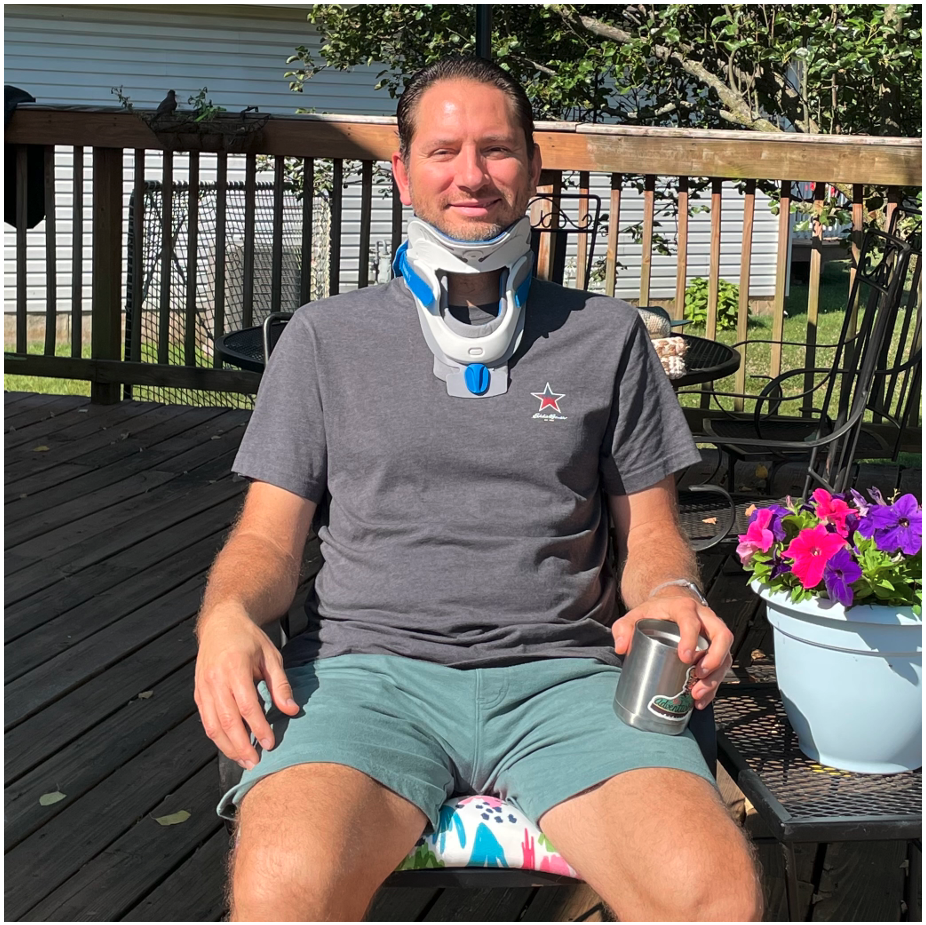
Words can’t describe the blissful feeling from this photo.
Unfortunately, I did not always keep this gratitude front and center during the recovery process. As the pain eased and I regained small amounts of independence, I was clearly making progress. But my expectations were moving much faster than my body could keep up. I became impatient, frustrated, and sometimes angry. Instead of noticing how far I had come, I focused on how far I still was from the healthy, active life I wanted back.
My instinct throughout my life has always been to press harder when something is difficult. I put in more effort, spend more time, and push until I find a way forward. I brought that same approach to my recovery. When I experienced a good day, I pushed harder with physical therapy, spent more time on my feet, and tried to do more without help. As a result, the muscle spasms, swelling, and pain would increase, leaving me feeling as if I was not making progress at all. Throughout my life, I’ve often had others tell me, “More isn’t always better.” During that time, I finally began to digest what that phrase really meant.
Instead of noticing how far I had come, I focused on how far I still was from the healthy, active life I wanted back.
The accident was not my first close encounter with how fragile life can be. Over the years, I’ve had a front-row seat as people I love have faced cancer, addiction, overdoses, serious illness, and loss. In those moments, I was deeply affected. But then I was close to the center of the story rather than being the focal point myself.
At the time, I believed that when I became the focal point, my experience would be different. However, as I reflect on these moments in my life, I see a remarkably similar pattern in my reactions. During a crisis, everything important comes into sharp focus. I lean into gratitude and refresh my perspective. As life gradually returns to normal, that clarity slowly begins to fade.
What Remains Five Years Later
Five years later, the accident is no longer something I think about every day. Life became busy again, and the urgency of those early lessons gradually moved into the background. There are stretches when I barely think about what happened or how differently the story could have ended. At times, I forget something I once thought I could never forget.
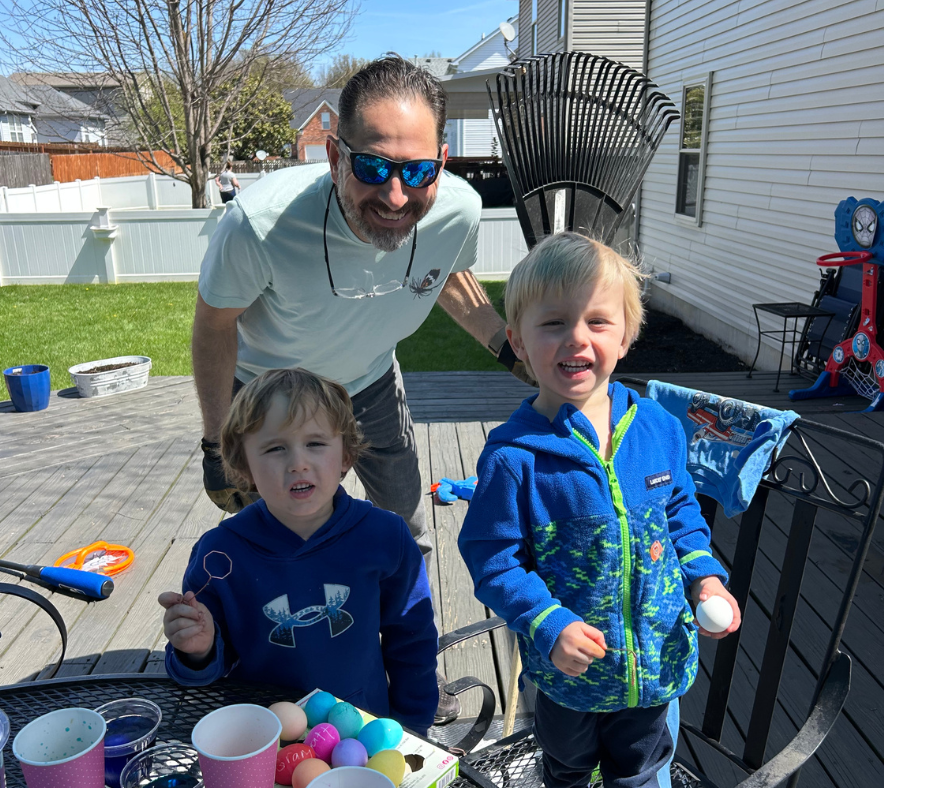
Life is better with grandkids.
My body eventually reminds me. I continue doing daily exercises to maintain mobility and keep the scar tissue and tightness from building up. But, when I get busy and begin skipping, the stiffness and discomfort creep back in until they are difficult to ignore. Those physical reminders take me back to the accident, but they also expose something humbling: even an experience that nearly ended my life can fade into the background once life begins to feel normal again.
For a long time, I believed my “Perspective is Priceless” mantra would continually guide me. I thought surviving something like this would permanently change the way I saw everything. The experience did change me, but not in the effortless way I once imagined. Ordinary pressures can still take over, and small frustrations can still feel more important than they are. That is humbling to admit after coming so close to possibly losing my life.
The difference is that I do not drift as far as I once did, and the intensity does not take over in quite the same way. I notice sooner when my perspective has narrowed, and I find my way back more quickly. Five years later, I am still not finished learning from what happened. But I am better at recognizing when I have lost sight of it and returning to what matters most.
The experience also deepened the way I listen to people who are carrying something difficult. Not every struggle is clearly visible, and not everyone needs advice, answers, or a push forward. Sometimes the most helpful thing we can offer is our presence, our attention, and the patience to let someone find their own footing.
Revisiting this story five years later has reminded me of things I do not want to lose sight of again. It has reminded me that life can change quickly, and even a hard-earned shift in perspective can begin to fade without ongoing awareness and intention.
If something in this catches your attention or connects with you personally, I’d love to hear your thoughts.
Brian Houp is an executive leadership coach specializing in helping senior-level executives maximize their leadership impact with more clarity and confidence. Contact Brian to learn more.