
The Leadership Timeout
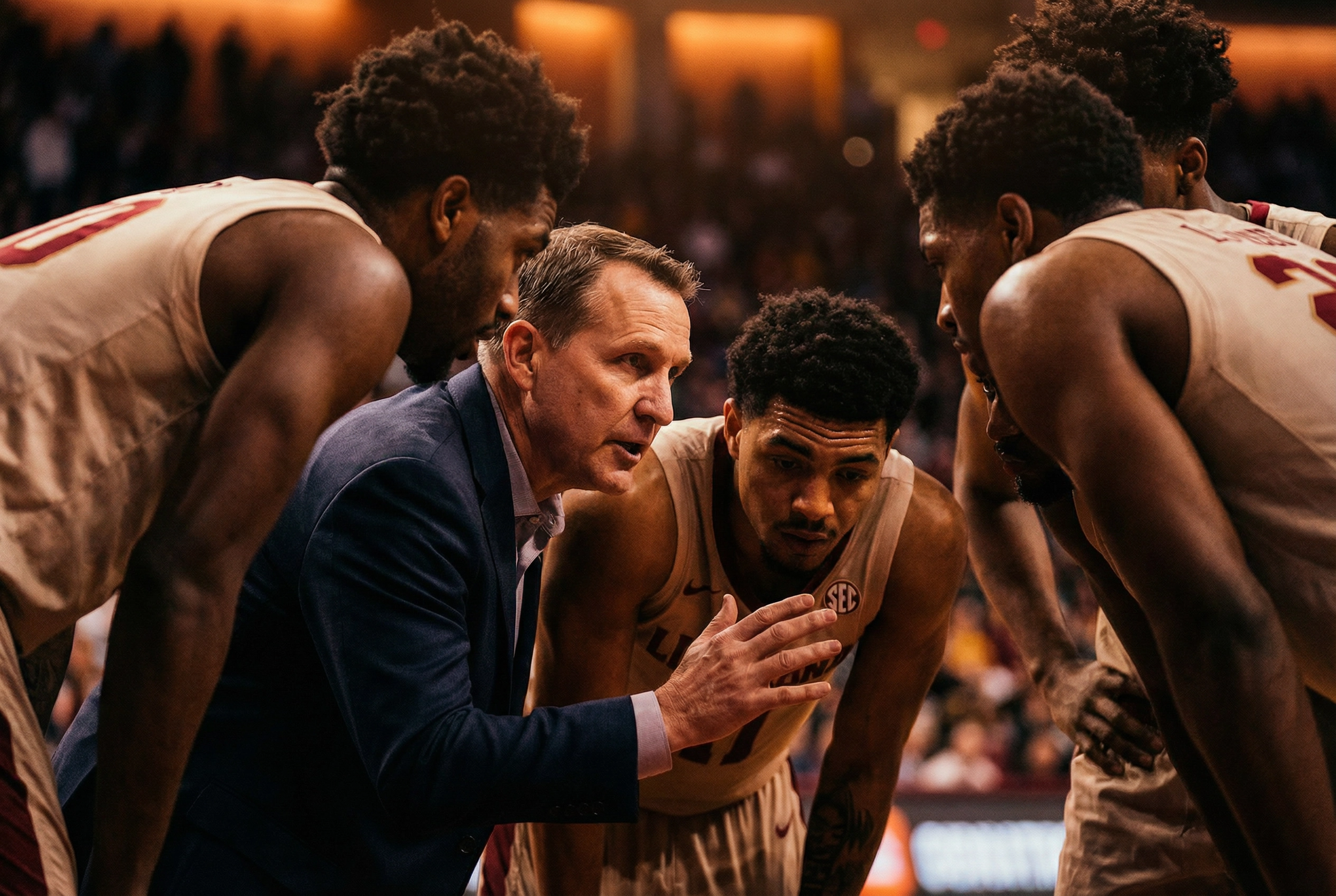
Some of my earliest memories involve sitting with my father and grandfather watching college basketball, especially during tournament season and March Madness.
In Kentucky, the tournament has always been more than just games on television. It’s something people follow closely, talk about constantly, and become emotionally invested in.
All these years later, the sights and sounds of March Madness still give me chills.
The tournament brings incredible energy. The games move quickly, and momentum can shift in a matter of seconds. A team that looked in complete control one minute can suddenly find itself scrambling the next.
There is one moment in those games that always catches my attention.
The timeout.
The crowd is loud. The pace is frantic. Players begin rushing decisions.
And then the coach signals to stop everything.
Not because the game is over.
Not because the team has failed.
But because the moment requires clarity.
Good coaches understand something important. When the game begins moving too fast, it becomes difficult for players to think clearly. And when clarity disappears, execution usually follows.
So they pause the action. They gather the team, reset the moment, and give everyone a chance to think again.
Just as important, the pause gives the coach a moment to step back, see the game more clearly, and decide what matters most next.
Leadership often requires the same discipline.
When the Game Speeds Up
Organizations rarely struggle when things are calm. The real challenges appear when the pace and pressure increase.
Decisions stack up. Meetings multiply. Expectations rise. The pace of work accelerates.
Many leaders respond the same way athletes often do under pressure: they move faster. They work harder. They push through.
Sometimes that works.
But often it creates something else.
Confusion.
Communication becomes rushed. Decisions become reactive. People begin attempting to solve the wrong problems.
The issue is rarely effort.
The issue is clarity.
When the pace of leadership exceeds the ability to think clearly, performance usually suffers.
That is often the moment when leaders need to call a timeout.
Recognizing the Moment
Many leaders hesitate to pause.
They worry that stepping back might signal uncertainty or loss of control. In reality, the opposite is often true.
Strong leaders recognize when momentum is building faster than the leader or the team can realistically process.
They notice signs like these:
Conversations become reactive rather than thoughtful.
Decisions are made quickly without full understanding.
Frustration rises across the board.
Communication begins to break down.
They also recognize that the problem may not only be happening around them. It may be happening inside the leader’s own thinking.
Mental fatigue. Loss of perspective. A sense of moving fast but not necessarily moving forward.
These are signals.
Not signals of failure.
Signals that it may be time to pause long enough to regain one’s clarity before guiding others forward.
What Happens During the Timeout
In basketball, a timeout is not simply a break.
It’s a reset.
The coach slows the moment down. Players gather around. The team reconnects to the plan. They discuss what truly matters and use that focus to direct the next play.
Leadership timeouts serve the same purpose.
They allow leaders to step back from the noise long enough to regain their own perspective before guiding the team forward again.
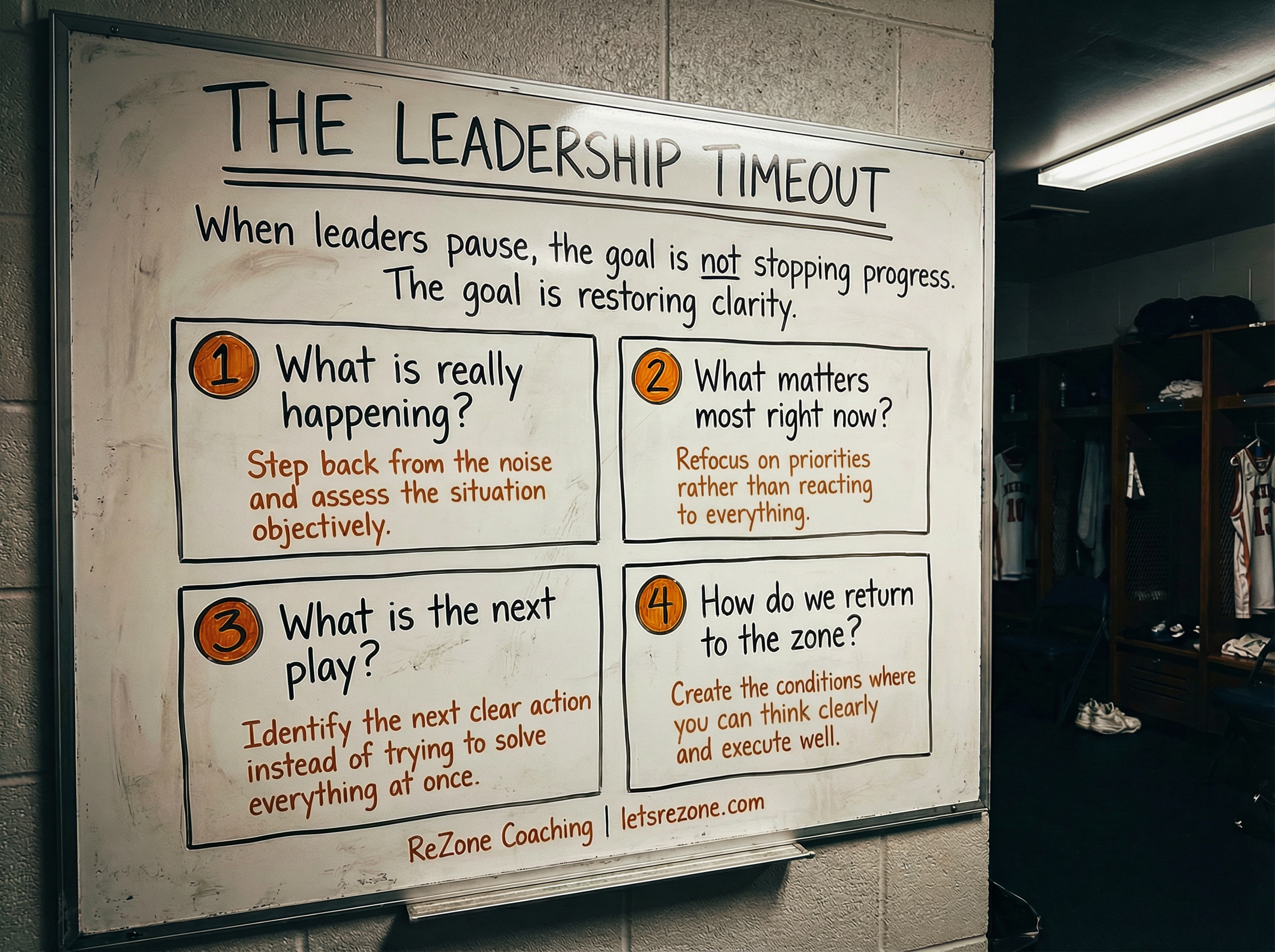
In that pause, a leader can ask a few important questions:
What is really happening right now?
What matters most in this moment?
What is the next play that moves us forward?
Often, the most important reset happens inside the leader before it happens inside the team. Great leadership always begins with strong self-leadership.
Sometimes the most effective leadership action is not pushing harder. It is creating the space needed for clear thinking to return.
Returning to the Zone
In sports, people often talk about players being “in the zone.”
It’s the moment when the game seems to slow down. Focus sharpens and execution becomes natural.
Leadership has similar moments.
When leaders pause long enough to step back, regain perspective, and reconnect with what matters most, something shifts.
The noise fades.
Decisions become clearer. Conversations become more thoughtful. The rhythm and flow are restored.
You might say the timeout helps everyone return to the zone where good leadership happens.
Not rushed.
Not reactive.
But clear, steady, and intentional.
The Discipline of Pausing
Great coaches use timeouts intentionally.
Not constantly.
Not carelessly.
But when the moment calls for it.
Great leadership demands the same discipline.
Pausing does not mean losing momentum. Often, it protects momentum. It allows leaders to reset the focus before small problems become larger ones. It restores clarity before confusion spreads.
And it reminds everyone that leadership is not only about action.
It is also about awareness.
A Leadership Question
As you watch the tournament this month, notice the moments when coaches call timeouts.
Then consider a simple question.
When was the last time you called a timeout in your own leadership?
And when you did…
Did it help you return to the zone where you think and lead at your best?
Brian Houp is an executive leadership coach specializing in helping senior-level executives maximize their leadership impact with more clarity and confidence. Contact Brian to learn more.